Peri-ADHD app icon

Peri-ADHD

Is it my ADHD, my hormones — or both?

If you're in your 40s and your focus, follow-through and patience have become harder to predict, you're not imagining it. Peri-ADHD is a calm, private journal that tracks your executive function across your cycle — and shows you your own pattern.

Coming soon to Google Play and the App Store.

Why Peri-ADHD

Perimenopause and ADHD collide in the same decade — and falling estrogen affects the same dopamine signalling that attention (and stimulant medication) relies on. Most women are left guessing which one they're feeling. Your own data can help you stop guessing.

ADHD diagnoses among adult women in their 30s and 40s roughly doubled between 2020 and 2022.
9 in 10
women with ADHD in mid-life reported their symptoms intensified around perimenopause in a large community survey.
40s
the decade perimenopause typically begins — the same years many women first discover their ADHD.

Figures are indicative of scale rather than precise constants. Sources: Epic Research (US, 2023) on adult-women ADHD diagnosis rates; ADDitude community survey of women 40+ (2022); peer-reviewed reviews of estradiol–dopamine interaction. Consult the primary sources for exact figures.

🩸

You already have a cycle tracker — so why Peri-ADHD?

Cycle apps track your period, not your executive function. ADHD apps ignore your hormones entirely. Peri-ADHD watches the two together — getting started, holding focus, mood, sleep, meds — and shows you what moves with your cycle and what doesn't.

🧠

Built for the overlap

Perimenopause tends to amplify existing ADHD traits rather than create new ones — which is exactly why it's so hard to tell apart. The app's differential view keeps the honest answer on the table: your ADHD, your hormones, or both.

🤝

Honest about its limits

Peri-ADHD is a wellness journal, not a medical device. It never diagnoses, never scores your likelihood of anything, and never gives medication advice. It describes your own logged pattern — and helps you bring better notes to a clinician.

How Peri-ADHD keeps it gentle

Thirty seconds a day, no guilt mechanics — and every insight shows its working.

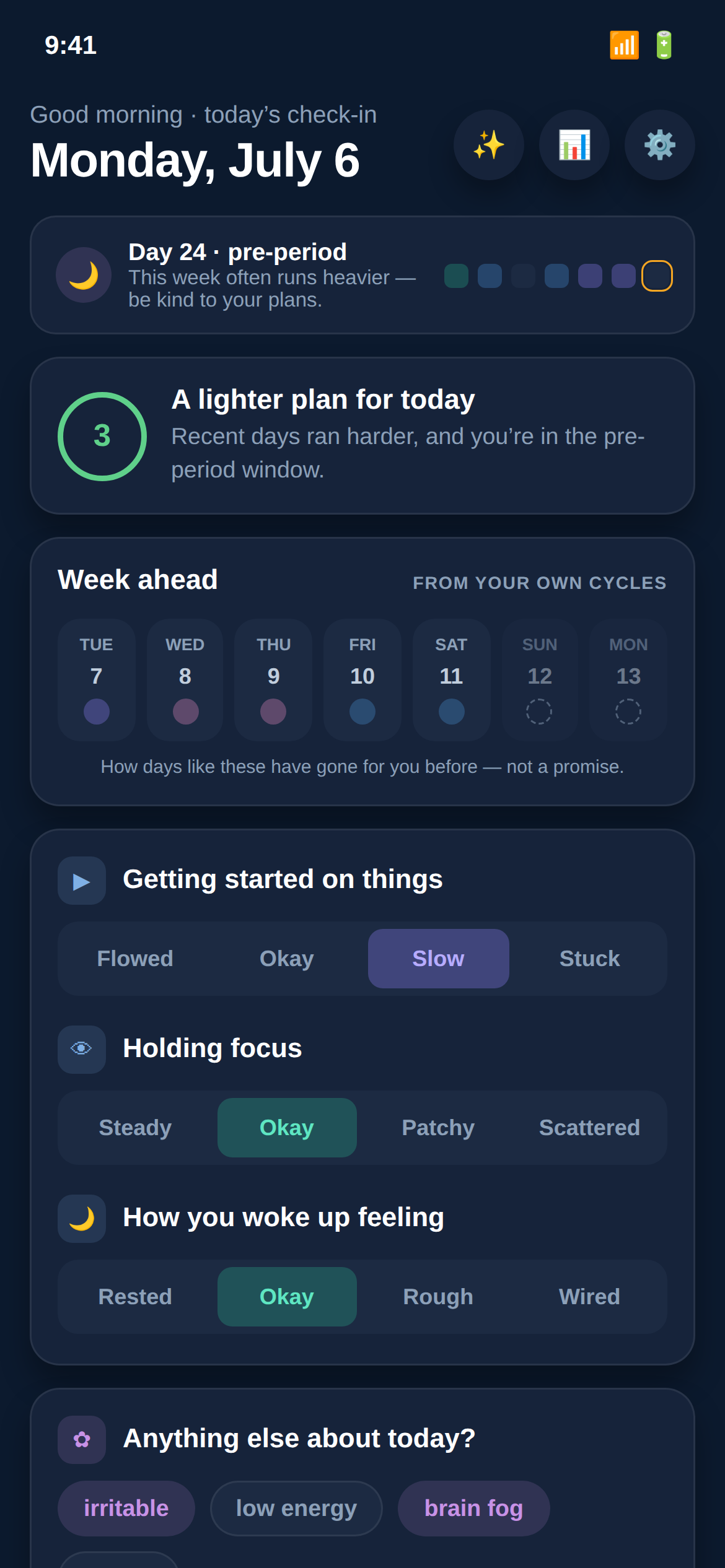
A 30-second check-in

Rate how the day actually felt. No streaks, no red marks, no shame — a lighter day always counts.

🗓️

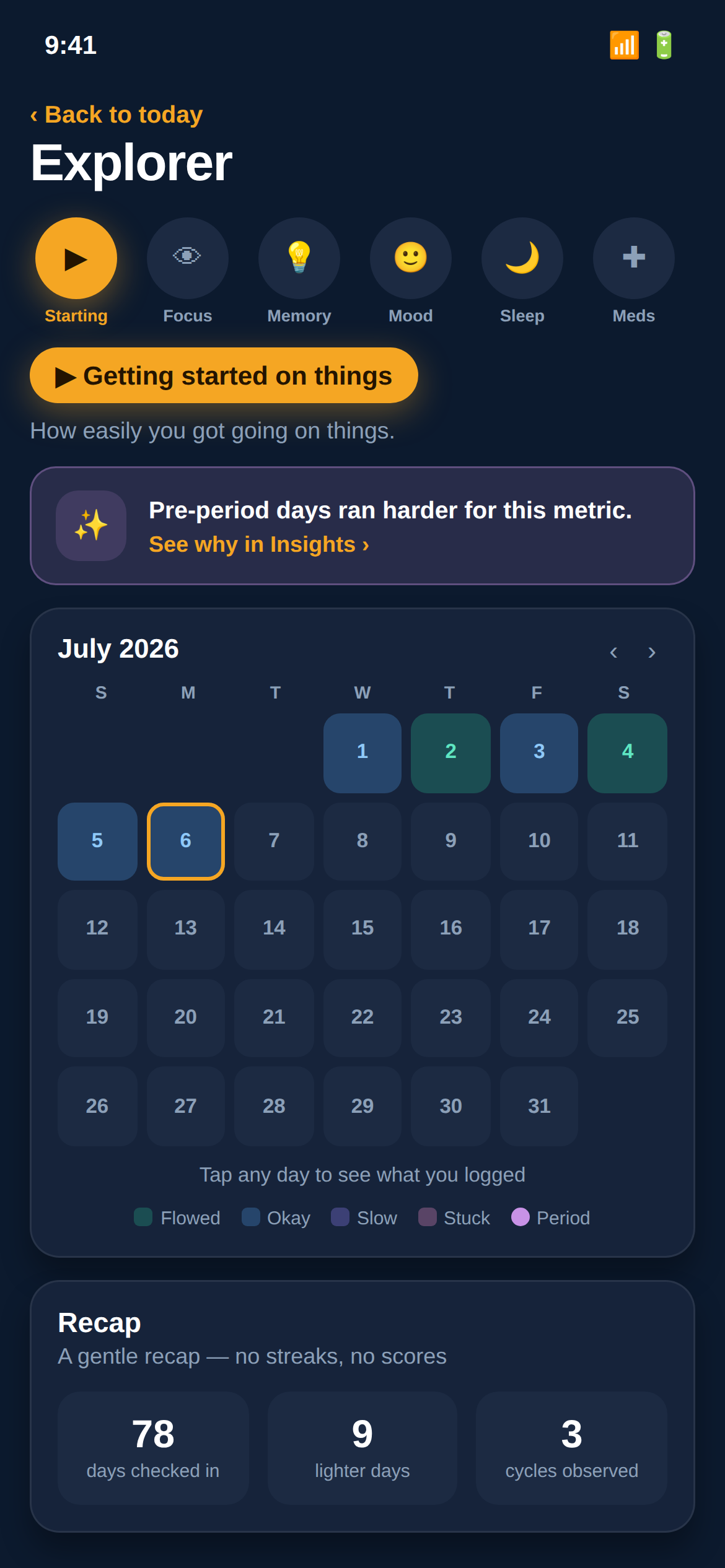
The Explorer

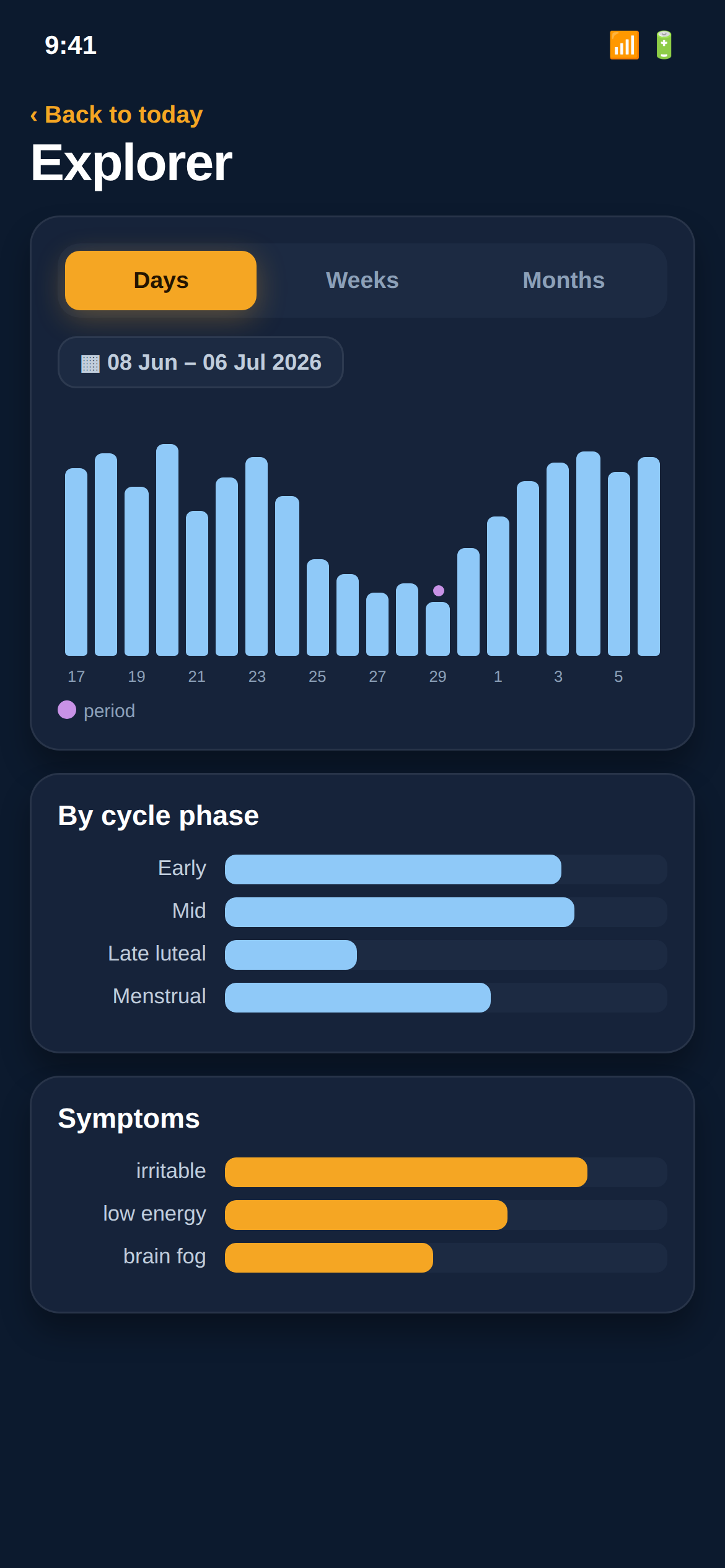
Your months at a glance: a calendar heat-map, trends by day, week or month, and how each metric behaves across your cycle phases.

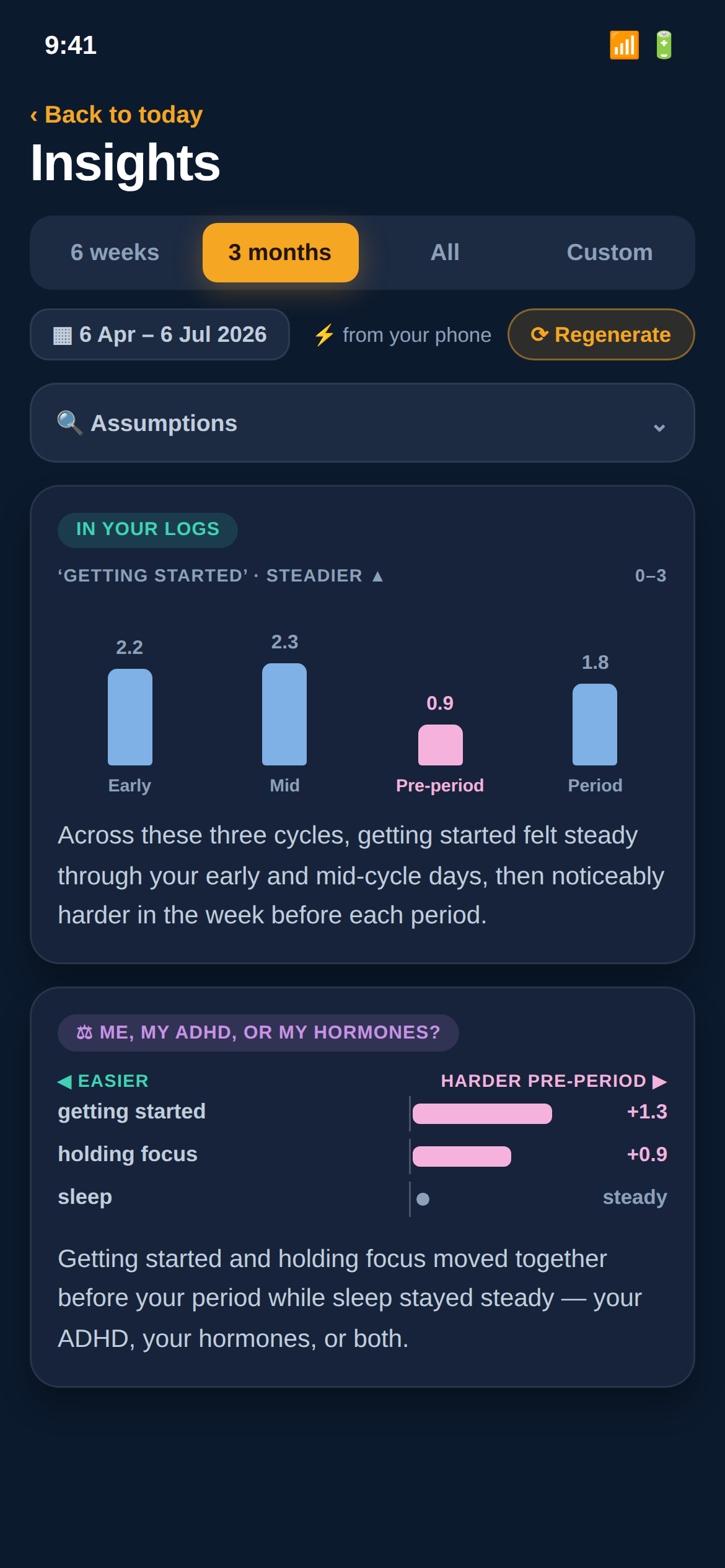
Insights that show their working

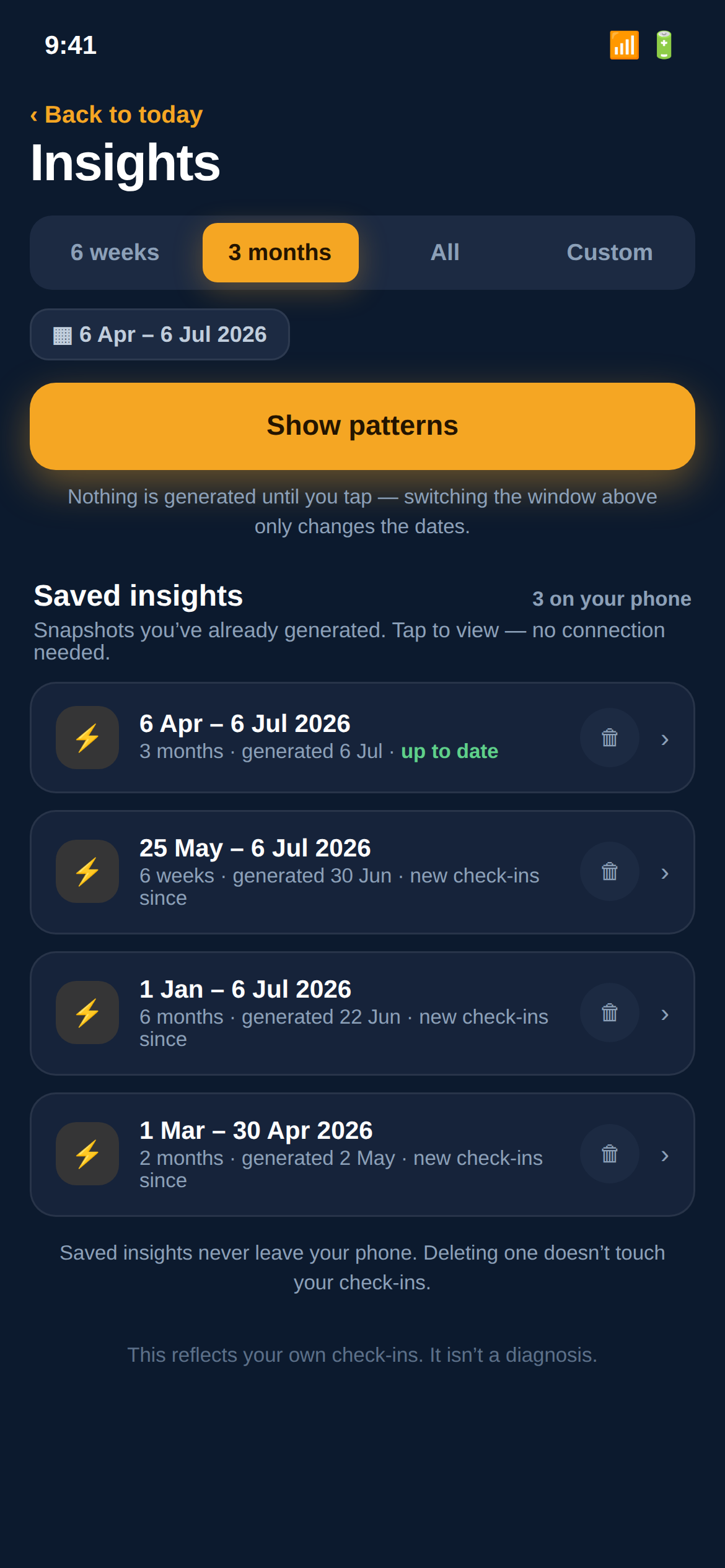
Pick a window and get your patterns in plain language — with an Assumptions panel showing exactly which de-identified figures were used. Every time.

🌙

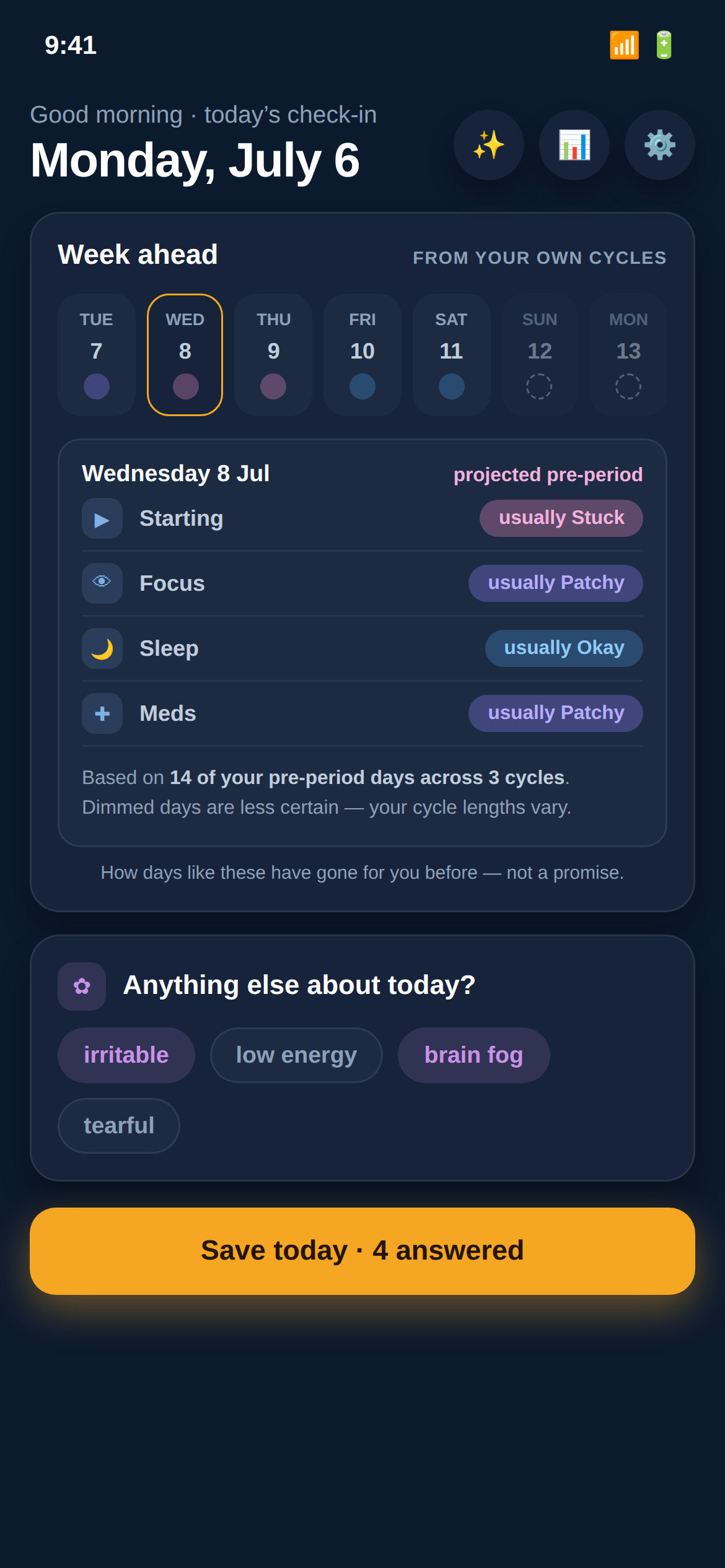
Week ahead

Your own past, projected onto the next seven days — how days like these have gone for you before. It dims honestly when your cycle makes it uncertain.

📄

Clinician summary

A one-page PDF of your own logged evidence — patterns by phase, symptoms, data quality — observations only, ready to hand over at an appointment.

🔒

Private by design

No account, no ads, no analytics. Your check-ins never leave your phone, and your backup is encrypted with a passphrase only you hold.

A look inside

Calm, dark, and readable on a foggy morning.

Today check-in with cycle context and week ahead Explorer calendar heat-map Trends and by-cycle-phase charts AI insights with charts Week ahead forecast detail Saved insights on your phone

Your check-ins stay on your phone

Peri-ADHD has no account and stores all of your data on your device. We can't see it — there's nothing of yours on our servers.

The only connections are subscription processing (RevenueCat) and, only if you opt in, a de-identified statistical summary used to phrase your insights — the app shows you exactly what it sends.

Read the full privacy policy →

Peri-ADHD is a wellness journal, not a medical device. It never diagnoses and never replaces a clinician. Whether a pattern is ADHD, perimenopause, or both is a conversation for you and your doctor — this app helps you bring better notes to it.

For clinicians and women's-health communities

Peri-ADHD turns "I can't think straight lately" into structured, patient-reported observations — logged daily, summarised by cycle phase, and handed over as a one-page summary. If you work with women navigating perimenopause or ADHD, we'd love to talk.